
Material & Equipment Choices
The material and equipment choices you make during construction have a huge impact on the comfort, environmental footprint and energy efficiency of your building.
Heating and Cooling
Electric air-source heat pumps (ASHPs)
Electric air-source heat pumps (ASHPs) are reversible air conditioners. Just like an air conditioner, in the summer they transfer heat from inside a building to the outside. In the winter they “concentrate” and transfer heat from the outside to inside a building. ASHPs can use ducts to transport the warm or cool air throughout a building, like most heating and central air conditioning systems. There are also “ductless mini-split” and “mini-duct” systems (the latter being a hybrid of ductless and ducted systems). Electric air-Source heat pumps can also be used to supply heat to in-floor radiant heating systems. These systems are called air-to-water heat pumps. There are also electric heat pump clothes dryers.
Ductless heat pumps
Ductless heat pumps, also known as “mini-splits,” move refrigerant, rather than heated or cooled air, from the outdoor unit to one or more indoor units. The indoor units are typically wall-mounted and include a small fan. Ductless mini-split heat pumps tend to be more energy-efficient than ducted systems, in part due to eliminating ducts and requiring smaller fans.
Hot Water Heating
Although they cost a bit more than standard electric or propane water heaters, electric heat pump water heaters (HPWH) easily pay for themselves in annual energy cost savings. In addition, compared to standard electric and propane water heaters, they reduce carbon dioxide emissions by 60-70%. Compared to Energy Star natural gas water heaters, HPWHs are much more efficient and reduce carbon dioxide emissions by about 50%, and the annual heating costs are about the same.
- Compared to electric resistance water heaters, ENERGY STAR HPWHs consume about 1/3 as much energy, reducing your annual energy costs for hot water by as much as 67%.
- Compared to ENERGY STAR propane water heaters, HPWHs are about five times as efficient, reduce annual energy costs by 75%, and reduce carbon emissions by 60%.
- Compared to ENERGY STAR gas water heaters, HPWHs are about five times as efficient, with 50% less carbon emissions, and have about the same annual energy costs.
Cooking
Radiant electric cooktops are more efficient than the traditional electric coil version and perform about as well as a gas cooktop. The most efficient electric cooking technology is induction, and induction cooktops deliver better, more consistent cooking performance than gas, with less wasted energy and no indoor gas and other pollution. Induction cooking is faster, easy to control, and safer than cooking with gas or propane. In addition, because the surface does not heat up (only the pans and food), it is very easy and safe to clean up any spills.
Insulation
Insulation provides resistance to heat flow allowing a building to better maintain desired indoor temperatures. An insulation material’s effectiveness is determined and measured by its thermal resistance, also known as R-Value. Insulating a building to achieve high R-values can reduce the need for heating and cooling while also allowing it to be more comfortable.
Mineral Wool
Mineral Wool is made from natural minerals or rock materials and on average contains 75% post-industrial, recycled content. Most mineral wool insulation is fire resistant and does not require any additional chemical treatment. The two common types of mineral wool insulation are Rock Wool and Slag Wool. Most commonly mineral wool is available as a loose fill or blanket insulation application.
Fiberglass
Fiberglass insulation is made from very fine glass fibers combined with plastic. Many manufacturers often utilize approximately 40%-60% recycled glass content. Fiberglass is typically considered fire resistant but can melt or contain paper backing that can ignite. There are a variety of applications to use fiberglass including loose fill, blanket, and rigid boards.
Cellulose
Cellulose insulation is typically made from around 82%-85% recycled paper or cotton products. It is treated with a fire retardant, most commonly borate, allowing for fire resistance. Cellulose is available as a loose fill insulation that can be applied to an existing building, blown in between the studs of the wall.
Solar
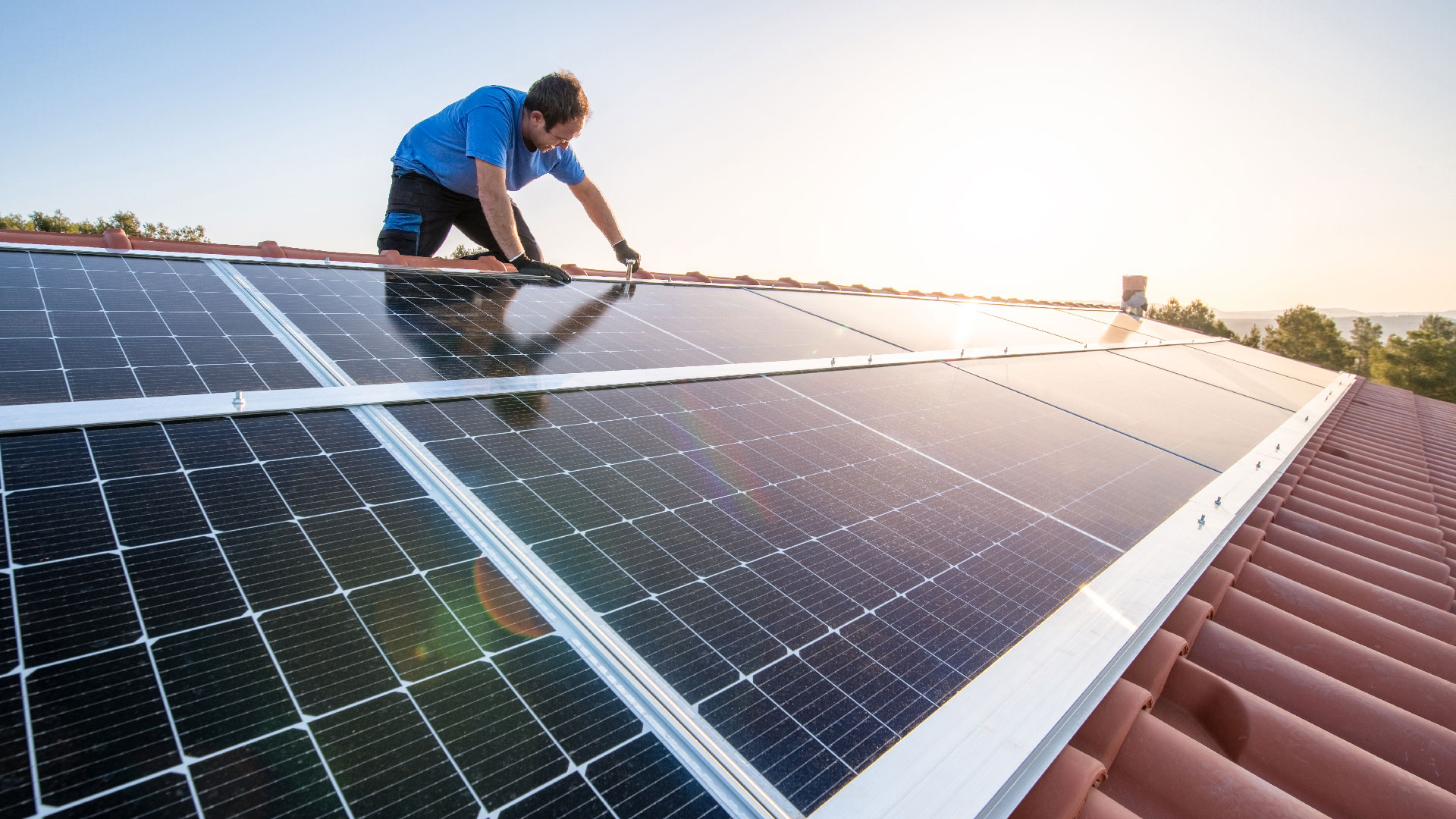
Solar photovoltaic (PV) technology captures the sun’s energy and turns it into clean, renewable, and affordable For technology to work the photovoltaic solar cell absorbs solar radiation. Once the sun’s energy interacts with the PV cell, electrons begin to move, creating a flow of electric current. The roof, shading and the building’s orientation can all affect the size and production of a solar PV system. Solar panels usually perform best on minimally shaded, south-facing roofs with a slope between 15 and 40 degrees.
Battery Storage
A battery system can afford continued evening or morning use of clean and renewable electricity generated during the day from an on-site solar photovoltaic (PV) system. A battery system can also provide back-up energy resilience should the power go out or be turned off due to a public safety power shutoff by your utility. Not ready to install a battery at this time? Ensuring your building is “battery ready” (i.e., where will I put it, have I saved the space needed, where/how of the connections, etc.) will save costs in the future when you are ready.
More resources
Whether it’s choosing the layout or siting, materials, HVAC equipment, or appliances, each element plays an important role in ensuring a structure is healthy and comfortable.
Make your building more resilient against future fires by considering how embers and small flames could ignite your building. Proactive action to build a resilient building or retrofit an existing building can help to reduce risk from wildfires or building to building fires.
A round up of rebates, discounts and incentives for energy and water efficiency and fire resilience.
Architects, landscape architects and designers, arborists, builders, energy raters, contractors and subcontractors all play a critical role in the design and construction of a high-performance building.
The material and equipment choices you make during construction have a huge impact on the comfort, environmental footprint and energy efficiency of your building.
Outdoor spaces play a significant role in how resilient a structure is to future climate disasters, and how fire and water wise a property is.